There were two articles in the Phnom Penh Post today bolstering my previous assertions about the real estate market in Cambodia.
And another one on who is suffering the most from the downturn in construction.
In case you don't read the Post you should because they are still the best when it comes to English-language papers in Cambodia.
Wednesday, November 12, 2008


Friday, November 7, 2008
Bust or No Bust in the Real Estate Market?
This seems to be a very popular subject indeed. Replies to my article below as well as comments on other boards keep kicking this question around. Most people say it’s a bust. Here is why I consider it a deflation, although the term itself is of secondary importance. What counts is the impact various factors have on both the players in the real estate market and the overall economy. Let me give you an example of one of those projects, in which I am involved as an adviser.
A friend of mine bought one hectare in Phnom Penh Thmey in April of 2007. It was the typical low-lying land along a higher-lying badly paved road, which was previously used as agricultural land, most likely a rice paddy. The difference in level was about 1 m. The reason he bought it was clearly for speculation, as the boom had been going on for a while now and he had profited well from a few previous deals. He paid $30/m2, which was still considered a good buy as most of the neighboring lots already went for around $50/m2.
First thing he needed to do was fill it up with dirt. He then built a low stone wall around it as a boundary. The land was then divided into 92 lots; the majority of them measured 4m x 15m, some twice that size, with some land set aside for villas. You also needed to allocate common land for streets, sidewalks, etc.
At that time, filling up one hectare cost about $5,000, so the total cost to him was around $310,000, including the low wall. The whole thing was a family affair; each of his adult children had chipped in to come up with this sizable amount. But one month later the price had already risen to $60/m2 and he had a lot of inquiries. Some people even came by with large wads of cash to buy on the spot. The market was this hot at the time. It really seemed like they were on the road to making a bundle. I had been watching the market and seen this incredible rise in prices, which to my critical mind was rather unhealthy. Much of the land was completely undeveloped - no power, no water, no access roads. But the local commune and Sangkat chiefs promised to bring in roads and power.
I advised my friend to sell immediately, forge the iron while it was still hot, so to speak. He was thinking about it and indeed sold off about 27 lots at $70/m2, but not because he thought this was a good price. He needed some money for different things, one of which was a big limousine. He said people didn’t believe the driver of a beat-up ’94 Camry was really the owner of the land. So the limousine was an investment in the business as well as a welcome status symbol. He no longer had a problem with the traffic police and fenced off streets were still open to him.
In October the price of land there had risen to $95/m2. I kept urging him to sell so he would have money to flip more land and in the end make more money than as if he waited for prices to rise.
But now he thought building the so-called Cambodian flats, basically row houses, would be the way to go. He could increase his overall profit by another quarter million. So he made plans for this but couldn’t carry them out for lack of capital. I did not want to get involved financially as I was by nature not a speculator but a trader or manufacturer by conviction.
Prices kept rising until they had finally reached $155/m2 in March 2008. In order to realize his plan he needed to build at least a model house so people could see the quality and then he could get down payments, which would be the base for his construction – a typical mode of financing and operation in the housing market (which he finally did, but not until August, a bit too late).
But slowly those price increases came to a stop on news of the real estate market collapse in the U. S. Although this did not directly affect the Cambodian economy, it made a few people with ties to overseas Khmer a little jittery so the white-hot state of the market became a red-hot state and finally only a glowing state in May. All admonitions to cash out were brushed aside in the hope of more rising prices after the election. He firmly believed it would go on and on and on.
A first disturbing sign was that prices dropped a little, e. g. $5/m2, then another $10/m2 in May and June. He still had buyers but didn’t budge. Then in July the market came to a complete halt, and prices started dropping even more, in our case, to $130, then to $120, and $110. It would still have been a nice profit of some $300,000. But in July everyone was waiting for the election to be over to see what was going to happen then, so no buyers. And that situation hasn’t changed since then until now – no or hardly any buyers. Finally the price for this property hovers around $100/m2, but determining a price is somewhat difficult if there is no action in a market. He is now holding on to his land waiting until the market picks up again. He is confident he can even sell it now at a discount and still make a profit, which probably is true. After a hype prices usually settle at a realistic level. His advantage is that some laterite roads were built so the site is not completely without access. Power is available nearby too. So some real value has been added.
This example is to illustrate my contention that it is not really a bust. I would like to point out that the signs for a slow-down started as early as March. This could be seen all over the place, not only at the site in question here. When things slow down gradually it is generally not a bust but a deflation. A bust is a free-fall.
But never mind the word. So far there is no word of anyone getting hurt in a way that they have lost real money, meaning cash. The big companies, e. g. the Koreans with multi-million-dollar projects, or the Canadia Bank have shown no signs of stopping their projects in progress. Of course, there is a credit squeeze; so many new projects have been put on hold.
But the majority of private speculators are just like my friend. The used their savings, possibly pooled them, or found partners to make those deals. Now they have been caught with their dreams of a nice profit unraveling, but it is not a nightmare yet, as they have no loans to pay back, and if they have some other means of making a living they can wait it out. And many of them, again like my friend, had gone through a number of previous deals that left them with enough money to live on for some time. One mustn’t forget that the cost of living, despite its 20%-plus inflation, is still only about one fifth of that in the U. S.
Like my friend said, ‘80% of the land in and around Phnom Penh is owned by rich people anyway. They have no problem holding on to it for some time.’
Westerners make a big mistake when they say it will get worse still. Again they forget there is virtually no mortgage market here. A recent article in the Phnom Penh Post stated that ANZ’s mortgage volume is about $5 million max, and they only loan 50% of the home value. That’s a negligible amount by any standard. So people losing their land or home won’t happen, apart from singular occurrences. Banks in Cambodia losing money on mortgage derivatives is not going to happen either. That concept is completely unknown in these parts. People losing their jobs and defaulting on their mortgages is an impossibility in Cambodia. People losing their jobs because of the real estate melt-down are the construction workers, service personnel, etc. Sorry, those people didn’t have the money to get into the game. Among others, these were all factors in the Western bust – not here.
So by and large, it’s a standstill, which will slowly re-gain some drive, perhaps not at the levels and hype as before, but surely there will be movement once the recession in the developed world is beginning to show signs of recovery.
As for myself, I didn’t speculate. I bought agricultural land, the cultivation of which still returns a slight profit, not as good as before because of the decline of commodity prices, but, like my Cambodian friends, my Khmer wife and I can wait for the market to recover. In fact, prices in my sector have been rising slightly already.
I also bought land to build a nice house on. Maybe it was a little too expensive, but then the location more than makes up for it – on a river bank about 500 m from the sea facing west. What more do I need?
Katyusha Rockets
I came across a picture of those rockets being fired in the New York Times. This is just to show how fearsome these weapons are.


Thursday, November 6, 2008
Is This What Happened?
The Thai-Khmer clash over the disputed border area at Preah Vihear is some time back and enough has been written about it, a lot of speculation has been going on; but us normal folks are none the wiser. So here is one more piece.
The shoot-out occurred on Oct. 15 just while I was driving along road no. 7 with my Khmer partner to visit one of our holdings in Rattanakiri province. It should be noted that my partner has friends in high places and an extended family, most notably quite a few nephews whom he brought up as all of his 8 his brothers and sisters, except 2, were killed during the Pol Pot era. Two are colonels, one an assistant to the highest ranking general in Cambodia. As we were driving along we got bits and pieces of news of what was happening and what happened over the phone. His son who studies media communications added his two cents every time there was a piece on the news wires, to which he has access by virtue of the faculty. Additionally, a friend of my wife’s is a general, commanding a brigade of elite body guards, who had been called to the ‘frontline’ in Preah Vihear. He is a battle-hardened soldier, wounded several times, and an experienced jungle fighter in the civil war with the Khmer Rouge. Let me tell you, that phone was ringing constantly. My friend is the patriarch of the family so everybody feels duty-bound to report the latest news to him.
This is just to tell what my sources were and that I don’t just grab things out of the blue like so many of the other bloggers who mostly just repeat what they read in the news and then put their own spin on it.
Clearly, what I am about to write is basically hearsay, and unconfirmed, basically just another piece of speculation, and this time with the spin I put on it, but everyone can make their own judgment. To me it rings rather true and credible.
From what I heard, Cambodian forces began massing along the Thai border two days before the clash, right after Hun Sen had delivered his ultimatum to the Thai Foreign Minister. It was widely reported that Hun Sen requested that Thai forces withdraw to positions before mid-July, when those incursions started becoming ever more audacious, clearly fueled by the domestic turmoil in Thailand. The Thai FM reportedly replied they would have to ask their parliament for authorization to withdraw, upon which Hun Sen said that doesn’t really make sense since they didn’t ask the parliament whether they could enter Cambodian territory to begin with. At the end of that meeting Hun Sen then issued his ultimatum. Whether this was done impulsively or with plans already in place to teach the Thais a lesson will remain a mystery. But right after this, troops were put on alert and necessary brigades ordered to reinforce the troops on the border. At the same time artillery was brought from Eastern bases to Preah Vihear overnight to be in position when the ultimatum ran out.
The next day, Wednesday, Oct. 15, Thai troops withdrew from the disputed area and had vacated it by 12 o’clock noon. The Cambodians were really surprised to see this but their surprise became even bigger when at 2 o’clock they saw Thai tanks moving toward Cambodian territory again.
Cambodian forces, of course, are no match to Thai troops when it comes to armaments. Cambodia’s most widely used piece of light artillery is the B40 RPG. They have another somewhat antiquated but still highly effective piece – the Katyusha truck-mounted rocket launcher.

(Archive photograph)
No one knows for sure who fired the first shot but a little after two a clock this conflict had developed from a tense situation into an open military conflict with bullets flying both ways. At one point a Thai helicopter gunship fired its rockets and reportedly hit an armored personnel carrier killing all eight occupants. Unconfirmed reports say that incensed the Cambodian commanders so much they launched counter-strikes with their Katyusha hitting tanks and killing scores of Thai soldiers.
At this point the Thai commanders obviously realized that Cambodia was indeed serious when it said Thailand would face the possibility of war. They ordered a hold-fire, which resulted in a sort of cease-fire until today. The Cambodian side claimed they surrendered, which, of course, the Thai side denied vehemently. Tensions still run high, with some soldiers obviously believing that another outbreak of hostilities is unavoidable.
Officially, fatalities reported were 3 dead on the Cambodian side, and 1 dead on the Thai side. Unofficially, it is said there were actually 8 or 11 dead on the Cambodian side due to that helicopter strike, and as result of that Katyusha fire at least a number in the teens dead and countless wounded on the Thai side.
Pride and the need for a resumption of negotiations made both countries play down the real effects of that clash, at least so it seems.
Western observers questioned the necessity of an armed conflict to resolve this for both sides thorny issue and are still wondering why Hun Sen took this action, which many consider to be outright brinkmanship given the apparent Thai military superiority.
But maybe this is what went through Hun Sen’s mind. A conference with the Thai PM was scheduled for that Monday preceding the clash. The Thai PM canceled the meeting on short notice citing problems at home and sent his FM instead. This man, who had said in an interview that he doesn’t know a whole lot about foreign policy, was ill-suited to the task at hand. Say what you may about Hun Sen, but he knows when he is dealt a good hand, plus he may have seen the Thai actions as an affront.
He saw the Thai PM weakened in his position what with the Thai opposition occupying the Thai government for months now. He has no power over his military to remove the demonstrators from the front lawn of the Thai White House fearing bloodshed and civil war. The military is obviously listening to someone else, definitely not to the Thai PM who at the same time is the Defense Minister and as such the commander of the military forces. This is a truly unique situation. Seeing a wounded Thai PM, a Thai government in disarray, and the Thai military standing on the sidelines, Hun Sen perhaps concluded now is a good time to show them that they can’t go on bullying the Cambodians and gave the order to fire or return fire, whichever may have been the case. He clearly assumed that Thailand would not risk an all-out war with its neighbor over a few square kilometers in a desolate part of the country. Additionally, Thai forces have no real battle experience, whereas the Cambodian forces can be compared to the Viet Cong in the 60ies and 70ies. They may wear tattered uniforms and walk in slippers, but by all accounts they are tough. Hun Sen reportedly said that the Thais may the elephant here, but the Cambodian ants can cause tremendous pain to the elephant.
A war would considerably weaken Thailand internationally, put enormous, additional strains on their economy, and they are already hurting economically, losing billions of tourist dollars because of that whacky opposition movement, which proclaims outlandish concepts, such as the abolition of democracy. Thailand also faces a long-festering Muslim insurgency in the South. It can’t manage to confine that, and it would be hard-put to face those tough, wily Khmer soldiers on their Eastern border.
So Hun Sen played a high-stakes game and won. He again showed that when it comes to power play he is not one to be discounted or scoffed at. Let’s hope the Thais will finally see that the territory is Cambodian by all international legal standards and good neighborly relations are much more valuable than a few sparsely populated square kilometers.
For all those who are interested in the historical context of the Thai/Khmer dispute the University of Sydney has a very illustrative animated historical map here http://ecaimaps.berkeley.edu/animations/2003_03_khmer_animation.swf
And finally, I am wondering what Sam Rainsy would have done had he been PM of Cambodia.
The shoot-out occurred on Oct. 15 just while I was driving along road no. 7 with my Khmer partner to visit one of our holdings in Rattanakiri province. It should be noted that my partner has friends in high places and an extended family, most notably quite a few nephews whom he brought up as all of his 8 his brothers and sisters, except 2, were killed during the Pol Pot era. Two are colonels, one an assistant to the highest ranking general in Cambodia. As we were driving along we got bits and pieces of news of what was happening and what happened over the phone. His son who studies media communications added his two cents every time there was a piece on the news wires, to which he has access by virtue of the faculty. Additionally, a friend of my wife’s is a general, commanding a brigade of elite body guards, who had been called to the ‘frontline’ in Preah Vihear. He is a battle-hardened soldier, wounded several times, and an experienced jungle fighter in the civil war with the Khmer Rouge. Let me tell you, that phone was ringing constantly. My friend is the patriarch of the family so everybody feels duty-bound to report the latest news to him.
This is just to tell what my sources were and that I don’t just grab things out of the blue like so many of the other bloggers who mostly just repeat what they read in the news and then put their own spin on it.
Clearly, what I am about to write is basically hearsay, and unconfirmed, basically just another piece of speculation, and this time with the spin I put on it, but everyone can make their own judgment. To me it rings rather true and credible.
From what I heard, Cambodian forces began massing along the Thai border two days before the clash, right after Hun Sen had delivered his ultimatum to the Thai Foreign Minister. It was widely reported that Hun Sen requested that Thai forces withdraw to positions before mid-July, when those incursions started becoming ever more audacious, clearly fueled by the domestic turmoil in Thailand. The Thai FM reportedly replied they would have to ask their parliament for authorization to withdraw, upon which Hun Sen said that doesn’t really make sense since they didn’t ask the parliament whether they could enter Cambodian territory to begin with. At the end of that meeting Hun Sen then issued his ultimatum. Whether this was done impulsively or with plans already in place to teach the Thais a lesson will remain a mystery. But right after this, troops were put on alert and necessary brigades ordered to reinforce the troops on the border. At the same time artillery was brought from Eastern bases to Preah Vihear overnight to be in position when the ultimatum ran out.
The next day, Wednesday, Oct. 15, Thai troops withdrew from the disputed area and had vacated it by 12 o’clock noon. The Cambodians were really surprised to see this but their surprise became even bigger when at 2 o’clock they saw Thai tanks moving toward Cambodian territory again.
Cambodian forces, of course, are no match to Thai troops when it comes to armaments. Cambodia’s most widely used piece of light artillery is the B40 RPG. They have another somewhat antiquated but still highly effective piece – the Katyusha truck-mounted rocket launcher.
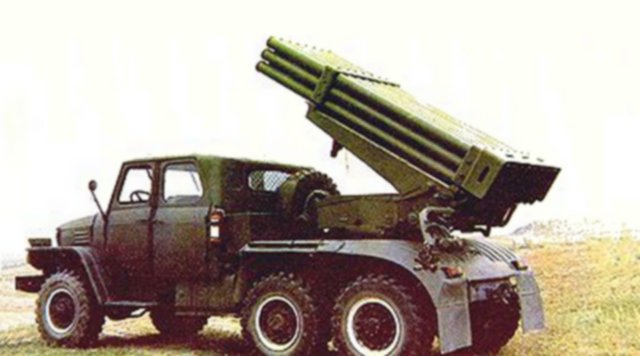
(Archive photograph)
No one knows for sure who fired the first shot but a little after two a clock this conflict had developed from a tense situation into an open military conflict with bullets flying both ways. At one point a Thai helicopter gunship fired its rockets and reportedly hit an armored personnel carrier killing all eight occupants. Unconfirmed reports say that incensed the Cambodian commanders so much they launched counter-strikes with their Katyusha hitting tanks and killing scores of Thai soldiers.
At this point the Thai commanders obviously realized that Cambodia was indeed serious when it said Thailand would face the possibility of war. They ordered a hold-fire, which resulted in a sort of cease-fire until today. The Cambodian side claimed they surrendered, which, of course, the Thai side denied vehemently. Tensions still run high, with some soldiers obviously believing that another outbreak of hostilities is unavoidable.
Officially, fatalities reported were 3 dead on the Cambodian side, and 1 dead on the Thai side. Unofficially, it is said there were actually 8 or 11 dead on the Cambodian side due to that helicopter strike, and as result of that Katyusha fire at least a number in the teens dead and countless wounded on the Thai side.
Pride and the need for a resumption of negotiations made both countries play down the real effects of that clash, at least so it seems.
Western observers questioned the necessity of an armed conflict to resolve this for both sides thorny issue and are still wondering why Hun Sen took this action, which many consider to be outright brinkmanship given the apparent Thai military superiority.
But maybe this is what went through Hun Sen’s mind. A conference with the Thai PM was scheduled for that Monday preceding the clash. The Thai PM canceled the meeting on short notice citing problems at home and sent his FM instead. This man, who had said in an interview that he doesn’t know a whole lot about foreign policy, was ill-suited to the task at hand. Say what you may about Hun Sen, but he knows when he is dealt a good hand, plus he may have seen the Thai actions as an affront.
He saw the Thai PM weakened in his position what with the Thai opposition occupying the Thai government for months now. He has no power over his military to remove the demonstrators from the front lawn of the Thai White House fearing bloodshed and civil war. The military is obviously listening to someone else, definitely not to the Thai PM who at the same time is the Defense Minister and as such the commander of the military forces. This is a truly unique situation. Seeing a wounded Thai PM, a Thai government in disarray, and the Thai military standing on the sidelines, Hun Sen perhaps concluded now is a good time to show them that they can’t go on bullying the Cambodians and gave the order to fire or return fire, whichever may have been the case. He clearly assumed that Thailand would not risk an all-out war with its neighbor over a few square kilometers in a desolate part of the country. Additionally, Thai forces have no real battle experience, whereas the Cambodian forces can be compared to the Viet Cong in the 60ies and 70ies. They may wear tattered uniforms and walk in slippers, but by all accounts they are tough. Hun Sen reportedly said that the Thais may the elephant here, but the Cambodian ants can cause tremendous pain to the elephant.
A war would considerably weaken Thailand internationally, put enormous, additional strains on their economy, and they are already hurting economically, losing billions of tourist dollars because of that whacky opposition movement, which proclaims outlandish concepts, such as the abolition of democracy. Thailand also faces a long-festering Muslim insurgency in the South. It can’t manage to confine that, and it would be hard-put to face those tough, wily Khmer soldiers on their Eastern border.
So Hun Sen played a high-stakes game and won. He again showed that when it comes to power play he is not one to be discounted or scoffed at. Let’s hope the Thais will finally see that the territory is Cambodian by all international legal standards and good neighborly relations are much more valuable than a few sparsely populated square kilometers.
For all those who are interested in the historical context of the Thai/Khmer dispute the University of Sydney has a very illustrative animated historical map here http://ecaimaps.berkeley.edu/animations/2003_03_khmer_animation.swf
And finally, I am wondering what Sam Rainsy would have done had he been PM of Cambodia.
Monday, November 3, 2008
The Real Estate Bubble – Revisited
For those of you who have been wondering whether it has burst yet following the world-wide financial crisis there is some good news and some bad news.
The good news is that it hasn’t burst – it has been deflating as I had predicted previously; so nothing new to report here.
The bad news, especially for those who still bought into the market in May and June, is that nothing is moving. Prices in Phnom Penh are down by up to 25% depending on the area – more in Phnom Penh Thmey and less in Toul Kork – no surprise there either.
West of Kompong Speu prices are starting to go down as much as 50% according to my information.
Korean mega-projects like Camko City and other big ones are still going ahead seemingly unfazed. Their financing was secured long before the crisis hit South Korea as well. But I know for a fact from one of the newer Korean banks in town that projects that were planned at the beginning of the year and to be begun about right now are on hold for the time being as they are still trying to sort out what will become of their financing. Boon Yong is one of the newer ones. They have a 10$-million project in the pipeline but are all scratching their heads now.
Traditionally construction is started at the end of September and beginning of October to take full advantage of the dry season. Just drive around Phnom Penh and you will see a lot of idle construction sites.
Another sector that is suffering, which has been widely reported in the newspapers, is the rubber industry. There has been a sort of a surge into agricultural land suitable for rubber plantations that even went into Koh Kong province, which normally is not known for rubber, up to the election. As we all know by now rubber prices fell up to 35% and latex prices up to 50%. I can tell you, though, that this trend is unabated as those plantations won’t be ready to produce until the trees are mature enough after 6 years. So this is still considered a good investment by most Khmer buyers who want to invest in something tangible. Predictions are that rubber prices will recover after the wintering season when the surplus stock has been depleted and the market has adjusted to a lower output.
Other agricultural land, though not completely unaffected, is also still actively sold at more or less normal prices.
Let’s wait and see what will happen to the mega-projects in tourism. Word is that people start saving on big ticket items, and international travel is one of them. My expectation is that Sihanoukville will look the same for some time to come. People who bought land in Sihanoukville can only hope for a rebound of the market in 2009 and 2010, if they have the breath to hold out that long.
Well, I bought land outside Sihanoukville for my own house. So I guess I will take advantage of lower construction cost now – iron and cement is cheaper, order books aren’t as full; so this looks like a good time to start.
Subscribe to:
Posts (Atom)
Subscribe To


 Posts
All Comments
Visitors
