Monday, March 16, 2009

A Continuing Saga

Read this:

http://www.phnompenhpost.com/index.php/2009031624784/National-news/Not-so-happy-community.html

and this:

http://ki-media.blogspot.com/2009/03/canadia-banks-land-grabbing-tactic-in.html

But it's not only going on in Cambodia:

Watch this:


And this:

Friday, March 13, 2009

How's That For the 'Richest' Country on Earth


From the Huffington Post in the U. S.

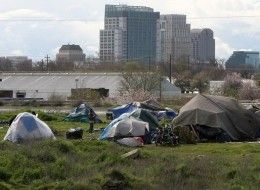
There are reports of tent cities popping up across the country as unemployment rises in a worsening economy. The biggest and highest-profile shantytown is in Sacramento, where hundreds of newly-homeless tent residents are cooking soup in old coffee cans.
Sacramento's KCRA reported this week that city officials plan to shut the tent city down.

No further comment needed.

Thursday, March 12, 2009

Putting It in Perspective

Recently, the IMF came out with a new prognostication revising their previous estimate of Cambodia’s economic growth from 4% to a contraction of .8%. Of course, this is a direct consequence of the dismal developments in the countries that contributed heavily to Cambodia’s growth in the past 8 years, the U. S. foremost among them.

Now that the U. S. has shed 4.5 million jobs in the past 18 months alone and unemployment stands at 8.1 %, the conventional wisdom is that garment exports will go down substantially as the U. S. is the main market for Cambodia. The current figures appear to prove it, with a 27% decrease in exports for the month of February alone. Last December it was 30%. The only ray of hope is that Cambodian garments are mostly low-end that are typically sold at discounters like Walmart. It is noteworthy that in this recession Walmart still manages to post sales and profit increases.

Likewise, tourist arrivals show a 2.9% reduction over the same month last year. And mind you, this is the high season. Tourist arrivals should at least be the same or even rise somewhat. According to the latest statistics the construction sector is holding sort of firm, although it was reported that some 3,000 to 5,000 jobs were lost there too.

Prime Minister Hun Sen finds fault with all those predictions, saying that all those number are altogether not that important. What’s important is that peope won’t go hungry in Cambodia. All those factory workers that lost their job can go back to their native village where they will find a rice paddy to cultivate, and a family that will take care of them. Surprisingly to his critics, he is not far from the truth. He may have oversimplified the problem, but in general this is exactly what people are doing.

Let’s look at few approximate numbers – I say approximate because in the end it doesn’t matter whether it’s 60% or 65%. Roughly 70% of Cambodia’s population lives in rural areas. Of those, a good 60% live on subsistence farming. In concrete numbers, this translates into 6.3 million people. I know a perfect example in my own family. My wife’s family comes from a small village in Kratie province, right next to the place where tourists go to see the dolphins. Of the about 100 families there, nearly 90 just live off their fields. If they produce a surplus they sell it on the market.

So the garment factory girls come back and find their wooden houses, a functioning family structure, and food to eat. They don’t have problems with heating or air conditioning. For power they use a battery, which is re-charged for a small charge at the home of someone who owns a generator. They wear simple clothes. There is one communal cell-phone which provides contact to the outside world. Yes, this is a simple life, and Westerners can only look on with widened eyes wondering how people can live like this. But let’s face it - this is reality, not only in Cambodia, but in most of SE Asia. And rural areas are exactly where the majority of the factory workers come from.

Of course, it would be nice if the share of subsistence farming would be reduced and that agriculture would contribute much more to exports and the GDP. We know the GDP is the value of the production and services of a national economy. And no, subsistence farming is not included, as by its very nature it does not contribute to the national economy but only serves to provide for the basic needs. So in that sense Mr. Hun Sen is right, but then, there are established criteria for measuring the GDP, and we can’t just change those for Cambodia’s sake.

Mr. Sam Rainsy calls for government support of agriculture to help those already suffering farmers. It’s easy to call for support when you are not in the government and don’t have to raise the money through taxes and import duties. Additionally, that support would most likely be a waste of money if you can’t sell your products. Just look at the cassava farmers. They are hurting. In the rubber industry at least the production can still be sold, albeit at much lower prices than a year ago. And size matters too. Cambodia cannot be compared to, say, Thailand. And Cambodia is 30 years behind in its development. Cambodia needs to be looked at with Cambodian eyes, not with Western eyes and a Western mindset. Of course, a lot of progress needs to be made to bring the country from its current level into to the middle section of the development scale. But when times are tough patience must reign.

So the fact that people can go back to their village is actually a boon for them. Yes, they are poor but they have to eat. And in this context let’s not look at the social problems, e.g. lack of health care and fundamental edcuation. This is for another, hopefully not too far off, time.

The Western alternative is no laughing matter. People losing their jobs, lose their homes, their savings along the line, their health care, practically their freedom. In my view it’s much more dire in the West. Recession hits people in the industrialized world much harder.

We all wish for those incredible growth rates to return. But let’s be a little more realistic with our expectations. This country has survived much worse times, and will also survive what will turn out be a little bump in the course of its history.

Sunday, March 8, 2009

The Real Estate Market at the Beginning of 2009

The newspapers have extensively reported about the current state of the Cambodian economy, and the real estate market in particular, so there is not much left for me to report outside a few personal experiences in this sector. I would like to highlight these with five examples, with which I have been familiar as recently as February.

In general, of course, it is evident that the market is soft and buyers are far and few between. No need to look for sellers – they are out and about in abundance, but as is so typical for Cambodia, a lot of them still haven’t got it. They are asking outlandish prices that are beyond the pale. However, they are still not shy to proclaim real bargains either.

Browsing the web pages of the two most reputable real estate agents one can find there is no scarcity of high-end luxury homes for sale in Tuol Kork or Boeng Keng Kang. You could think you are in West Palm Beach in Florida, Florence, Italy, or in Nice, France, and not in Cambodia. Homes for $3.0 million to $5.0 million are no rarity. Again, are there any buyers? I doubt it very much as people will probably just hold on to their money until the situation has changed – cash has become a somewhat rare commodity these days – and no one knows when that will happen. Estimates for a 2010 recovery may seem overly optimistic.

Nonetheless, there is some activity going on, maybe not so much with the professional real estate agents but with the many smaller developers or speculators that are not in dire straits, e. g. the ones that don’t have to service bank loans, or don’t have to complete a started ambitious project and don’t know how and where to raise the necessary funds. By all accounts, banks have severely limited their heretofore already comparatively small stake in real estate financing. Those independent operators have one advantage – there are no middlemen involved, they can pass on the 3% commissions to the buyers.

One thing is clear – and this is where the chickens come home to roost – the developers that invested heavily in the so-called Cambodian flats are looking at a very dim near future – at least in my view. Back in October 2007 I counted approximately 250,000 units, either begun or in the pipeline, based on the land being cleared at that time and on a physical count. This number was reduced dramatically by project stoppages, lack of financing, and a dried-out market demand. The ones that were completed for the most part sit empty. Just drive to the airport and you will find rows and rows of flat houses waiting for buyers and occupants. But don’t just look along Russian Boulevard, look inside, e. g. those little side streets. There are literally tons of empty flats – when I have the time I will go and count them and report it here.

But what about those mega-projects? Again, started projects, like Camko City, the Bassac Villas, and the Canadia High-Rise are going ahead, though at a slower pace it seems. Planned projects like the Golden Tower, the World City seem to be on hold – at least I couldn’t see any noticeable activity in both locations; but then I am on the coast and infrequently go to Phnom Penh. All those big tourism projects - Koh Puos, Koh Rong, Ream, Otres Beach – no activity, although the bridge construction to Koh Puos is still going on. As to the island itself, we’ll see in 2010 or 2011 whether all these plans are very realistic. The last three years press releases about super-projects were released in a steady stream. Now sobering reality has set in, I guess.

In summary, all this was to be expected if you just looked at the supply-and-demand situation. It is well known that South Korean investors didn’t do much of a country study before they came in with their bags full of money, which they now transferred back to Korea in order to take advantage of the slumping Won.

Everybody is waiting for the turn-around. Going by official statistics is no help at all. Growth prediction is haphazard at best, as the recent forecasts by major institutions more than aptly demonstrate – they range from a contraction of 1% to a growth of 6%. Analysts never got it right anyway. I have been following the dollar ups and downs for 30 years now and not once had one analyst gotten it right even over the medium term, likewise with oil prices recently. So read your own tea leaves. My money is on the last quarter of 2009 and the beginning of 2010 for improvements to start showing up. How Cambodia is going to fare is anybody’s guess. If you read some snide remarks by expat foreigners and overseas Khmer one would think they are glad Cambodia is finally being hit by the recession too. I believe there is a lot of jealousy involved here. Some just can’t believe that people made so much money on their land deals; and not only the powerful.

Here is my look at a few examples:

Cambodian Flats (Ptea Leweng)

These typically go for about $110,000 to $130,000 for the three-story version (as pictured). The two-story type is offered at about $50,000 to $70,000, and a one –story apartment in either type goes for $25,000 to $45,000. One floor is normally 4 x 16 m. The ground floor is more expensive as this space can be used for a store, shop, etc.


Western-style townhouses

Korean companies usually build these. One typical example is one called Vogo Village near the airport. Selling prices range from $89,000 for the smaller house (6 x 16 m) to $115,000 for the larger house (7 x 16 m). The property comes with 24/7 security.
The distinct feature is that these houses have two real floors, as opposed to the Cambodian Flat, which has this mezzanine half-floor – which usually is bedroom with a low ceiling. This is a nice and clean small community, set back about 500 m from road number 4 to Sihanoukville.


Bassac Villas

These are top of the line townhouses and villas. The villas all feature a very small lot but this is prime land right on the river, although most of them won’t have a view of it, as they are set back too far. Additionally, the condo buildings going up right now will obstruct the view. The villas go for about $300,000 and offer about 300 m2 of living space. The townhouses as pictured sell for about $200,000 to $300,000.


Phnom Penh Thmey Developments

This site developer offers lots at $140/m2, with an option to have the house built at $35,000 for the ground floor. The whole site comprises 94 lots, of which about half are sold already, and a few houses are under construction. It's located off Hanoi Road. Business has picked up these last few weeks.


Stung Hao Development

A Khmer developer has three ha parceled into 600 m2 lots. It is located at the junction of the road from Sihanoukville to Stung Hao and Stung Hao to Veal Ren. A corner lot sells for $12,000 and a middle lot sells for $10,000. A new port is being built across the main road to Sihanoukville. The developer is probably banking on this project. This looks like a good investment for people who only have a little money and can wait 2 or 3 years for this region to grow. (Not much to see in the picture.)


Tuesday, March 3, 2009

Recent News

I.
Yesterday the Phnom Penh Post published and interview with Dr. Lao Mong Hay, a researcher with the Asian Human Rights Commission and former member of the Khmer People’s National Liberation Front.

Dr. Lao is very critical of the current government with respect to human rights and other civil issues. What’s remarkable is that this KPNLF was allied with the Khmer Rouge, the same way the former King was. Of course, it was all in the interest and furtherance of human rights. I am not saying that people can’t reform and have a change of mind and philosophy but the fact remains that people, no matter what shade of political color, who allied themselves with the Khmer Rouge are just as responsible for their actions as the Khmer Rouge themselves. And this does not exclude the U. S., the United Nations, where the Khmer Rouge held the seat of Cambodia, and the Chinese, and finally King Sihanouk himself. Events and actions leading up to the 1993 elections may possibly be excluded, but let’s face it, all these talks and conferences were held for political expediency to see that each party got its objectives implemented.

This is not to say that Dr. Lao was complicit, but those explanations that one was not really involved always sound sort of hollow. Additionally, Dr. Lao is now a staunch royalist, and sometimes his views as expressed in his commentaries on Asian Online are somewhat out of tune with the reality of present time.

However, what I wanted to highlight when citing this interview are the following passages:

Quote
What do you think about the new alliance between the SRP and HRP?
I don't think the two parties could work very well together. There are clashes of personality. There are no clear ideas or policies. This sort of alliance comes and goes, and they'll need to work hard to consolidate their unity.

What do you think caused the royalists' decline in politics?
Authoritarianism. When leaders are so autocratic, their subordinates lose their creativity. I have met some of them. At the beginning, they were very bright, but after one or two years there were no more ideas because they were not allowed to think.

There are some princes that have continued to be in politics, for instance Sisowath Sirirath. The nation might be in crisis later on, and we might need the royalists as we did in the 1980s and 1990s. And who can be sure our ruler will not appoint his descendants, like Kim Il Sung and Kim Jong Il have? He could become King under a new name.

How do the old political leaders - like Son Sann - compare with new leaders, like Sam Rainsy or Kem Sokha?
Some of those old leaders started off with work experience as government officials and then, when the French left, they became leaders. For the time that the French had been in Cambodia, they left behind a reasonable working system of government: the basic institutions of the Cambodian state, and the rule of law. So we were more conscious about rules. Compare this to leaders now. How long was Sam Rainsy in government? Two years, and at the top. And Kem Sokha: What work experience in public administration does he have?

Unquote

So authoritarianism is to blame for the royalists decline? What should the royalists’ role in a democracy be anyway?

The royalists have nothing going for them except that they were born into a royal family. Retaining a royal title and entering politics is taking advantage of their ancestry by implying to less educated people they know better than the rest. And, one must not forget that kings were historically authoritarian. Only the uprising of the disenfranchised masses changed that.

It appears that most of the royals in Cambodia still seem to consider this ‘their’ country and people, and not that they are just one of the people. King Sihanouk is the best example when he still refers to the people as ‘my children’. He is not and never was the father of the nation, most certainly not during the difficult political times of the 60ies and 70ies.

So I would think that royals should just relinquish their royalty if they want to enter politics – and be Mr. or Mrs. Citizen like everybody else.

A very interesting point he made, however, is on the alliance between SRP and HRP. So there are no clear ideas or policies? Well, I am just a lowly blogger in this case, but if anybody cares to check many comments I made on this blog, this is exactly what I, as a neutral observer, have pointed out for a long time. Blasting the government is no alternative and no way to set change in motion. Personally, I don’t know about their personalities, but if reports from people who are familiar with this are to be believed, this alliance won’t survive the next elections. And the opposition’s lack of experience is actually frightening. The current government isn’t the best by any stretch, but I would fear for Cambodia’s future if the opposition came to power in the near future.

The whole interview can be read here:
http://www.phnompenhpost.com/index.php/National-news/A-visionary-behind-the-scenes.html

Please note that KI-Media, otherwise an ardent publisher of Dr. Lao’s views, this time did not re-publish the Phnom Penh Post’s interview on their blog.

II.

Another interesting tidbit comes courtesy of KI-Media, which posted the SBS video on ‘Country for Sale’ on their website. I did not bother to watch it but the excerpt with the interview of the Australian ambassador is definitely intriguing.

A similar dwelling as Dey Krahom had to be removed and people moved elsewhere to make room for the new Australian embassy. Now, obviously this is somewhat hard to explain in view of the outrage that followed the Dey Krahom saga. As ambassador of a democratic nation that strives to observe human rights she is surely aware of the sensitivity of this issue but seemingly did not really know how to handle that curve-ball.

But maybe this just goes to show how difficult it really is to know what to do and what not to do in situations like this, as opposed to how it should be done?

Quote
MARGARET ADAMSON: No, I understand what the principles are, but it is difficult indeed to actually have the documentation, documentation that is accepted, to enable those claims to be respected.
Unqote

Visitors